Thinking For The Self

meditation

Written by Eugene Morgan

“But meditation is thinking for the self, by the self, and thinking freely and easily; what the self has to offer for the self.” Milton Erickson

Meditation is about focusing in our internal world.  If we ever saw someone meditate, more likely it’s a person with shut eyes.  When we close our eyes, it forces us to attend to our inner world.  Closing our eyes help us to cut out external distractions.  The inner world is really where the unconscious mind can work its magic.  When we close our eyes, we can begin to pay attention to our thoughts, feelings and images.  We can see clearly what we’re thinking, recognizing what emotions we’re feeling at the moment and watching what images flashing across our minds. Studies have suggested that meditation can alter the brain. However, researchers aren’t sure what mechanism causes such alterations in the brain.

The practice of meditation began centuries ago.  Erickson’s definition of meditation is thinking freely and easily by and for the self.  It is a powerful inner experience because our unconscious minds are now in charge, during meditation.  And if we just get out-of-the-way of our unconscious minds, and to just wait and see, it can show clearly a solution to a problem, it can aid us in making a difficult decision, and it can help us to know how to proceed in difficult situations for the self.


The Forces that Govern Our Bodies

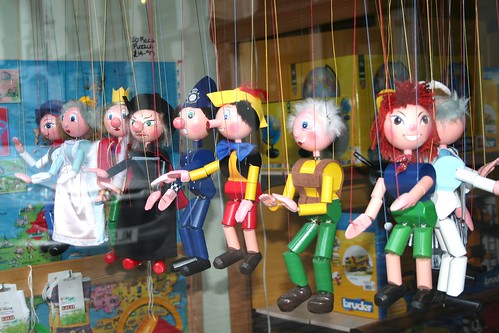
Puppets on a String

Written by Eugene Morgan

“Human beings, once they have learned anything, transfer this learning to the forces that govern their bodies,” Milton Erickson.

The ‘forces’ that govern our bodies, Erickson is referring to our unconscious minds. Therefore, our unconscious minds are what govern our bodies.  Our unconscious minds are storehouses where everything learned are sent and retrieved.  We’re constantly retrieving from our unconscious minds.

For example, as you’re reading this sentence, you’re retrieving information.  In fact, for you to understand this sentence you’re reading now, your mind has automatically taken information from your unconscious mind without your awareness.  You become aware of this only when you come to an unfamiliar word that you haven’t learned yet.  But once you’ve learned it, that too, is transferred and stored away in your unconscious mind.

There are countless things that we learn that we don’t know we’ve learned.  Another example, would be speaking a native language.   When our parents were teaching us how to say “dad, dad” and/or “ma, ma,” we didn’t know we were learning.  It’s amazing how much our senses involved in the process of learning a language.  We as infants had to learn to hear specific and distinctive sounds, we also saw the expressions on the faces of grownups on how the words were expressed.

So, if we have the ability to retrieve, such as, symbols like letters and words, we can also retrieve other learned experiences to help us get through hot spots in our lives.


Creativity Can Free Us From Our Biases

creativity is maximized...

Written By Eugene Morgan

“People who accomplish a great many things are people who have freed themselves from biases,” Milton Erickson

You can’t force creativity but we can let it come to us.  It’s important to have a certain mindset so we can see things beyond our biases.  We  first must acknowledge or admit to ourselves that we do have biases that restrict us from creativity.  Some of us have more biases than others.  Nonetheless, creativity can aid in freeing us from our biases.  When we reach a certain limitation of our perspective, it means it’s time to move beyond our biases and not be afraid to brainstorm and discover new ways of thinking.  Erickson says if we free ourselves from biases we can do many great things.  What great thing would we like to do today?

Observation is the key to Objectivity

Sentinel

Written by Eugene Morgan

“When you look at things, look at them,” Milton Erickson

It is easy to either jump to conclusions or make assumptions about things without looking at them.  We tend to quickly based our experiences on the event first before really seeing what’s happening. If we really look at things and let things happen, then we can make a proper assessment on them.  Observing ourselves will give us insight about our behaviors, feelings, actions, and thoughts.  Sigmund Freud once said that dreams are a secret letter to ourselves.  Maybe dreams are like a secret letter because we don’t take the time to see our behaviors, thus our unconscious mind collects them and we revisits them in our dreams. When we begin to see our behaviors, then we can make some corrections and understand why we feel a certain way when this or that event happens.  We won’t know about ourselves if we don’t look at things and find some useful discoveries that can make a difference in our lives.

A Sprinkle of Humor Makes Life Better

Rainbow Nonpareil Sprinkles 10-14-09 3

Written by Eugene Morgan

“Enjoy life and enjoy it thoroughly.  And the more humor you can put into life, the better off you are,” Milton Erickson

Humor is like sprinkling sugar on reality, it has a taste of bittersweet.  We have had some bittersweet experiences and will continue to have them.  With the bitter experiences we can sprinkle a little humor on it and with the sweet experiences we can save and use it later.  It is easier to get through bitter experiences as long as we wear the eyeglasses of humor. Humor can bring us through a lot of life’s difficulties.  It’s all right to have a good laugh sometimes, “the better off you are,” according to Erickson.  It’s better for us to laugh things off than to live life so seriously.  Thus, we can seriously laugh at our problems, while we enjoy thoroughly the good things life brings us.  There will come a time, when we will be face to face with death, and it will smile at us, we will just smile back; that’s what it means to enjoy life thoroughly.


Rediscovery Ourselves

Smile-Inside-Potatoes_32464-360x480


Written by Eugene Morgan

“I always find when I can do something, it’s pleasurable,” Milton Erickson

Discovering what we can do is pleasurable.  As we were growing up, there were many discoveries.  We discovered that we have toes because we can wiggle them.  We discovered that we have feet because we can stand on them.  We discovered that we have legs because we can run with them.  We discovered that we have vocal chords because we can yell or scream with them.  We discovered that we have eyes because we can see with them.  We discovered that we have ears because we can hear with them.  We discovered that we have brain cells because we can think with them.  We have a lifetime of discoveries to go.  We continue to discover new things about ourselves if we just see what we’re doing at that moment because it’s pleasurable.

Some Confusion….Also Some Enlightenment

_GGB1658


Written by Eugene Morgan

“Into each life some confusion should come…also some enlightenment.” Milton Erickson

We’re on the verge enlightenment when we’re in a state of confusions.  We’re at the beginning of loosening up our rigid ideas and rigid beliefs.  Because before there were confusions, there were rigid ideas and rigid beliefs. The good news is that we have an opportunity to make a change while in this state.  We can choose to either go back to our old way of thinking; that kept us shackled up, or find a new way of thinking about things; that can free us.  No one except ourselves can take our choices away. Rigid ideas definitely can narrow our choices, but when enlightenment sets in, our minds begin to widening, we begin to feel our feelings again.  Yes, rigid ideas is one of the contributing factors of not being able to feel.  So if we’re willing to open up our minds, let the enlightenment set in, then we will begin to see clearly with understandings.


Strength Leaning

Look what i've found for lunch! / Mira lo que encontre para el almuerzo!

Written by Eugene Morgan

“And how willing are you to lean on your strengths?” Milton Erickson

We forget, sometimes, that in other areas of our lives, we do very well in.  When we have difficulty learning something new, we forget that we can use what we’ve learned from other areas of our lives. If, we have organizational skills at work, we can also use those same skills to organize a home project.  Sometimes, we leave our problem-solving skills at work, when we need them at home.  Usually, we’re rewarded for our skills at work, and we see no need to use them at home.  But that’s untrue.  Although, we’re not getting paid for using our skills at home, we do feel a sense of satisfaction, after we complete a home project.

We don’t have to scratch our heads, when trying to problem solve we can lean on our strength for that.  At work, we’re totally in adult-mode, when we want to present our best self, but, when at home we age regress a little. We want to feel a little dependence on our significant other and leave our strengths at work.  It’s alright to bring out our best self home as well, beside, we get a lot of things done around the house.

Learning Starts With Us

Quiet

Written by Eugene Morgan

“In a learning situation you have to do your own learning,” Milton Erickson

It is important to note that we have to do our own thinking, develop our own understanding.  Ultimately, no one knows us better than we know ourselves.  Everyday, we live with ourselves for the rest of our lives.  We were there on the day of our birth, we’ll be there on the day of our death.  We have a life time of experiences that we can learn from to help us get through life’s challenges.  We all have our foibles to contend with daily.   We don’t have to take life so seriously; it’s okay to laugh at our foibles.  Besides we’re going to need them to understand and learn about others.  We can only take from what we learn and use them for our betterment.

Potentials Restore Well-Being

Unfolding Wood Anemone


Written By Eugene Morgan

“The potentials within a person can restore well-being,” Milton Erickson

In the above quote, Milton Erickson uses the word “potentials” in a noun form.  The noun form of the word “potentials” defined in the dictionary as “something that can be develop or become actual.”  Erickson deliberately uses the plural form of the word “potentials” which shows that we have more than just one potential.  The article word “the” in front of the word “potentials”’ in the quote makes “potentials” specific; something specific within.  When reading the quote we fill in the gap based on our backgrounds and our life experiences what the specific potentials are for ourselves.

Erickson didn’t say, “The potentials within a person can make a person feel better.”  He said, “potentials within… can restore well-being.” The quote is powerful because we have the stuff inside of us that can develop into something or become actually something that can aid in our restoration.  Let us now start the restoration process.


What A Mind Can Do With An Idea

Idea Bulb

Written By Eugene Morgan

“I don’t lay on of hands, I lay on of ideas,” Milton Erickson

Ideas are like seeds; they grow into fruition.  They will grow if they’re often watered and get enough sunshine.  Ideas are like gold nuggets, they’re precious and rare.  Ideas are like a lighthouse, they can help guide and direct.  However, seeds won’t grow if they’re not in proper soil, inadequately watered, and lack sunlight.  Gold nuggets aren’t precious and rare if there is no value in them. And a lighthouse is useless in broad daylight for guidance and direction.  Just as an idea, if we don’t pay attention, it will fade away into the background of our minds.  Nonetheless, our minds can fuel an idea into an image, and then the image can become a dream, and, finally reality. Don’t pass up an idea, because it’s as small as a seed.  There is a lot of potential in a small seed.


Feelings are like Color, they Paint our World

vibrant globe and lavender

Written by Eugene Morgan

“….Cause all our feelings are done by ourselves,” Milton Erickson

As humans we experience our lives through our feelings.  Feelings help us to stay in contact with our environment and with other people.  As long as we interact with others, there will always be a chance that we will experience a certain emotion.  Why do we love listening to stories, or watching movies, or watching plays?  Because these things invoke emotions from us like excitement, sadness, joy, or anger. Emotions helps us to connect with and identify with the characters.  Our emotions help us stay connected with each other.  Some of us were taught to not express emotion, like anger.  Emotions aren’t necessarily good or bad, they tell others and ourselves what we’re feeling. When certain emotions aren’t allow, we lose our connectedness to others and world.  Our world becomes black and white or gray.  Let us properly express our emotions without fear of the consequences.


The Real Joy In Life

"Life in a teapot"


Written by Eugene Morgan

“Reacting to the good and the bad, and dealing with it adequately—  that’s the real joy in life,”  Milton Erickson

Sometimes we have the tendency of focusing on the bad.    And when we do see the good, we have the tendency of wondering how long the good situation will last.   We also have the tendency that a bad situation will last indefinitely.  Both the good and bad are only temporary.  In any bad situation, we can always look for the good in it.  It depends on how we see it.  When we choose to see the bad in the light of the good, we are expanding our minds.  When are minds expand, we will discover that there are more choices.  And with more choices, there is freedom and with freedom, real joy.


The Good Days Are Coming

Sunshine Skyway Bridge Tampa Bay Florida

Written by Eugene Morgan


“And look forward to the good days coming,” Milton Erickson

Some days are like sunny days and other days are like rainy days.  If we had our way, most of us would prefer our days sunny.  But as long as we interact daily with our environment some of our days will be rainy.  All of us carries a certain standard about how our days should be and when that standard gets violated it disrupts our world.   During days of rain, we can learn from it and during our days of sunshine, we can be thankful and appreciative that we made it through the rain.  When rain drops fall, we won’t melt.  For those of us who showered this morning, we have proof that we didn’t melt.  So lets take on the day whether it’s rainy or sunny.


Exercise:

During times of rainy days, I would like you to recall a nice sunny day.  That’s right…  You can feel the warmth of the sun shining on your face… That’s right… Let the warmth begin to radiate from your face down to your neck then to the back of your neck…That’s right… I would like you to sit with that warm feeling until you’re satisfied.  That’s right… After you’re satisfied, I would like you to take your time about feeling that warmth moving down your back then around the front trunk of your body… That’s right…. Just wait and begin to feel the warmth continuing moving down your right leg to your right foot…  That’s right…. Now you can move the warm feeling to your left foot then up to your left leg until you’re satisfied….


Earning Your Happiness

winning goal

“That every happiness is earned and, if given to you, it’s merited,” Milton Erickson

When we complete something, we feel a sense of accomplishment especially when it’s a difficult task.  But sometimes, we get in the way of completing a task.  Erickson would call this conscious interference.  For example, self-doubt is one of the techniques that our conscious minds use to distract us from completing tasks because it’s based on a belief that some tasks are just too difficult to complete. Therefore, we say to ourselves, “I can’t do it.”  We have these tapes and pictures in our heads that keeps us from doing what we want.  Tapes we play over and over like “you’re not good enough,” “you’re not smart enough,” and  “this is too difficult for me to do.”  We also make the image of a task in our mind enormous that we get paralyzed and feel overwhelmed by it.

However, we all can think of a time when we’re in the middle of  a task, we’re very much congruent in that moment.  Our minds and bodies are one.  There are no internal conflicts. And sometimes it’s a difficult task, but somehow we learn to break the enormous task into smaller tasks.  We divide and conquer.

Exercise:

You can sit quietly alone or if you’re where people are, you can close your eyelids and start to think about a particular task that you want to complete that you find difficult for you to start.  That’s right… Let yourself see it.  Ask yourself how do you see it?  Is it an enormous task?  Is the picture of the task enormous?   If you visualize an enormous picture, then shrink it down. Do you see it in color, or, in black and white? If it’s in black and white make it in color.  If you were to stand next to the image how big is it compare to you?   If the picture is bigger than you, shrink the picture or make yourself bigger than the picture.  With this exercise you may experience some of the different sensations in your body.


Eugene Morgan


Memorial Day: Remembering Loss of Loved Ones

Memorial Day Sunset

Written by Eugene Morgan

Today is Memorial Day.  This is a time when families and loved ones get together to have outside barbecues.  It’s a time for swimming pools and beaches.  It’s time for picnics in parks and frisbee throwing on newly green grass.  It’s time for remembrance of our fallen soldiers who have made the greatest sacrifice-their lives.

The last words my father said to me before he passed away were, “Son, don’t forget about your daddy.”   No one wants to be forgotten.  Remembering a loss of a loved one or a close friend affects us deeply as it should.  I think Memorial Day is like a mini funeral, we revisit our loss and feel briefly our grief.

A memory is a powerful mental-mechanism; because when we revisit an old memory, we re-live that moment.

Here is a little but powerful exercise.  Find  a quiet place and reflect upon the suggestions below:

Suggestions:

“Today is a special day…  Today we sit back and pause for moment…  We can look back…  We can slowly  go into our memories and think about our fallen soldiers…  As we look back,  we can think about our loved ones who also have passed on…    We missed them…   We can begin to hear their familiar voices… and we feel ourselves smile again…  Lets wait and see… and let our unconscious mind bring up those images of our loved ones…  That’s right…  While we sit and wait, we might as well intensely look at any spot… or focus on our breathing… Then let our eyelids close so we can see better the image…  That’s right…  We can talk with our loved ones, if we wish to like we would in our dreams…  And we can tell them how much we love them and we can hear back, “I love you…” We then can feel them again as though they’re alive…  Truly they’re alive but inside us.  That’s right…   Allow those good feelings to spread throughout our bodies…  It’s alright to return to those memories sometimes…  This is what give us strength in difficult times…”


An Old Raccoon

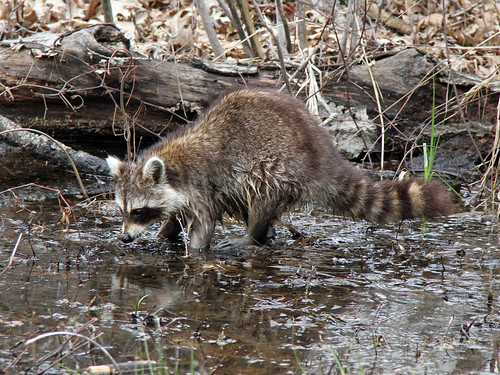
Raccoon


Written by Eugene Morgan

One evening while the old man finished up a long day of fishing and an old raccoon began its evening fishing, discussed about the difficulties of adjusting to old age.

“I hate the idea of growing old,” said the old raccoon.

“Please listen to what I’m about to tell you,” replied the old man.  “You’re the oldest coot I have ever seen.  You’re the oldest raccoon in your communal den.  You dislike the idea of growing old but that’s a fact that you can’t change.  And you enjoy being useful when you hunt for fish and frogs. You’re afraid that old age will take away your joy but you’re mistaken.”  After hearing this from the old man the raccoon was too shocked to respond before the old man took off.

That next day while a young raccoon saw the old man fishing, asked,

“Can you teach me how to fish?”

“How can I teach you how to fish when you’re a raccoon and I’m a man,” the old man questioned.  But that gave the old man an idea and said to the young raccoon,

“Why don’t you come back tomorrow at the stream behind the hill.”

“Okay” replied the young raccoon.

The next evening the old man and the old raccoon was fishing along the stream when approached the young raccoon.  The young raccoon knowing better not to ask the old man again, instead, asked the old raccoon to teach him how to catch a fish.  Before the old raccoon could give an answer, the old man interrupt and said,

“This raccoon is too old, too fragile, and too stubborn to teach you.  The old man looked over to the old raccoon and said,

“This raccoon is too young, too inexperience to catch a fish.  In fact, his front paws aren’t fully developed enough to catch anything.”

The old raccoon and the young raccoon both said,

“Can too!” and they both left to prove the old man wrong.

Two weeks had passed before the old man had heard from the old raccoon.  The old raccoon said to the old man,

“You’re right about one thing.”

“What’s that?”

“I’m stubborn, sometimes.”

“Yes, that can either lead you to joy or take it away but old age can do neither,” said the old man.

Bright-eyed and Bushy-tailed

Acorn Squirrel

Written by Eugene Morgan

The old man upon hearing the disturbing news about his friend paid a visit to his friend’s underground burrowed home.  The old man began hearing a fainted sound as he approached the burrow.  He looked down it and wondered what that sound could be.  As he lowered his head closer to the burrow’s hole, the sound became recognizable.

“Is that snoring I’m  hearing?” the old man asked himself.

A squirrel  heard and shouted, “Let me be! A coyote is going to eat me!”

The coyote is nowhere around,” the old man said, “and I can’t make you come out but I can leave you something to eat.”

So the old man left a trail of food and went on his way.   Long after the old man left, the ground squirrel resurfaced from his burrow to find acorns; a trail of them.  Being afraid, one by one, the squirrel took each acorn back to his burrow and return for the next one.  After that, he then realized he  had no way of getting back to his burrow because he had taken all the acorns that were left.  Too scared to look for the burrow, he decided to follow the remaining trail of acorns  in front of him.  The trail lead  him to the old man.

“A trail begins when a friend helps another friend find his way back,” the old man said.

“The last thing I do”

Written by Eugene Morgan

A good friend of mine from work passed away on Saturday, January 29, 2011 almost exactly a year after my father died on Saturday, January 9, 2010.  I wanted to dedicate this blog post to my colleague, Ernie, and my father.

A student was spreading rumors about Milton Erickson dying.   Erickson heard about the rumor and in his classic response said, “I think that is entirely premature. I have no intention of dying. In fact, that will be the last thing I do.

That statement is so powerful because it implies that there are many things Erickson is planning on doing in the future and that death only represents the final act he will do.   It’s like he’s taking charge of his life. Why should we wait for death to come? Instead, we should do things in our lives that are meaningful and stop wasting time.  Death is only one of life’s roughages.

“Part of the Roughage of Life”

Erickson’s above quote is his description of illnesses, deaths and some tragedies as roughages of life.  He believes that these things are only roughages or rough spots.   He accepts the roughages as just a part of life.   The difficulties of life help put things in perspective; thus we have an opportunity to value life more.

Should We Grieve

Throughout our lives we have and will continue to experience losses.  Grief is defined in the dictionary as “1: an emotional distress caused by or as if by bereavement. ”

However, Milton Erickson would go so far to say “There is a lot of hogwash going around about assisting families in grieving.”  I was shocked when I first read this but I don’t believe Erickson is saying not to grieve.  Consistently with Ericksonian principles, every individual is unique; therefore, everyone grieves differently. We each have our own way of grieving a loss.

There are two ways we can approach a loss of a loved one.  Either we can dwell on the loss of that person, or we can recall the good memories that we have stored up about that person.  I prefer to recall the good memories.  I believe there is a place and time to grieve a loss.

But I don’t think Erickson is saying not to grieve a loss, as any emotions like anger, guilt, shame, and sadness are natural emotions we have all experienced.  I believe Erickson is trying to relay a message that we need to put losses into certain perspective and not dwell on them.   Chronically dwelling on a loss puts us in the past, not in the future.

Orient to the Future

Orienting toward the future is a constant theme in Milton Erickson’s work.  Before Milton Erickson’s death at the age of 78, he was looking forward to his lectures at the university.   He was not waiting to die, because life is for the living, and he chose to live.

Ericksonian Fable: The Hungry Lion

Written By Eugene Morgan

An old man was in his garden, when a lion approached him and said,

“I’m going to eat you.”

“Oh?” asked surprisingly the old man, “I knew my death would be certain but not by you.”

“Then who were you expecting?” asked the lion.

“A large pack of spotted hyenas,” replied the old man, “I’m honored to die at the mouth of a lion—King of the Beasts! If you are going to kill me then make it swift and sure.  But you must be warned that after killing me, the spotted hyenas will smell a fresh scent of my flesh.  As you know the spotted hyenas will loot a lion’s kill.  Therefore, you will have to drag me for cover if you want to eat all of me.  So would you prefer a small part or the whole portion of me?” asked the old man.

“I would prefer the whole portion, but that seems unrealistic.  If I kill you here, I will run the risk of only eating a small portion of  you before the large pack of spotted hyenas arrive at the scene,” said the lion.

“That’s right!” said the old man.  Although you are the King of the Beasts, you’re in the hyenas’ territory.”

The old man curiously asked, “Don’t you smell the scent of the hyenas?”

“Not until you asked me, but I’m a  hungry lion.”

“Yes indeed you are but the hyenas smell the scent of you.  In fact, during our conversation, they’ve been watching you all the long waiting for you to kill.”

The old man suggested that the lion roar if he wanted to scare off the spotted hyenas, but the lion lost his appetite.  The old man asked, “how come?”

The lion said, “Somehow you left a bad taste in my mouth.”